 As governments, grant-making institutions, and thought leaders search for practical pathways to create jobs, strengthen rural economies, and build more resilient food systems, one option is gaining momentum during global discussions – development of the dairy sector.
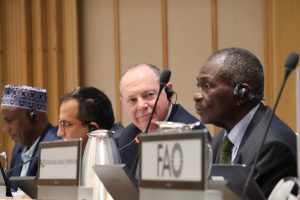
The potential of dairy was featured during the Global Dairy Platform (GDP) side event “Value Addition and Employment Generation through Sustainable Dairy Transformation” during the Food and Agriculture Organization of the United Nations (FAO) Committee on Agriculture (COAG) Sub-Committee on Livestock at the FAO Headquarters in Rome on 4 June, 2026.
“While dairy begins with milk production on farms, its economic contribution extends far beyond the farm gate,” said GDP Executive Director Donald Moore, who moderated the side event. “Dairy value chains support a wide range of economic activities, including collection, transportation, processing, logistics, retail, veterinary services, feed supply, packaging, and distribution. As a result, dairy development has the potential to contribute not only to food security and nutrition, but also to employment generation, enterprise development, rural prosperity, and broader economic growth.”
Keynote: Increased Demand Helps Drive Increased Employment
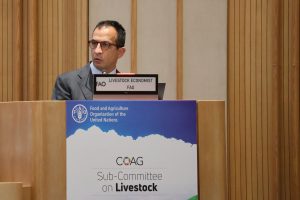
FAO Livestock Economist Ugo Pica-Ciamarra’s opening keynote focused on the employment boost that development of the dairy sector can provide, fueled by increased consumption of processed dairy products as incomes rise and urbanization accelerates.
The studies he is conducting in collaboration with GDP highlight how dairy development creates jobs not only on farms, but throughout the value chain. Employment opportunities in dairy processing and manufacturing increase significantly as economies develop, while wages in processing facilities consistently exceed national poverty thresholds across income levels.
Using Spain as an example, he demonstrated how dairy processing facilities are distributed across rural regions, bringing stable, skilled, and well-paying jobs closer to where people live. Unlike many industries that concentrate employment in urban centers, dairy creates economic opportunity throughout rural economies.
Pica-Ciamarra noted that while dairy farming has been extensively studied, far less attention has been paid to post-farm-gate activities despite their growing importance to economic development.
“There will be major employment opportunities in the downstream segments of the dairy value chain as countries develop and dairy sectors modernize,” he said.
Panel Discussion: Dairy Investment Shows Positive Impact on Employment, Income
The dairy sector’s potential was echoed during a panel discussion that featured Guilherme Perez (World Bank Group), Dr. Yaya Olaitan Olaniran (Nigeria), Bishar Elmi (Kenya), and Irene Mortensen (Arla Foods), who joined remotely from Bangladesh, where she was visiting one of Arla’s dairy development programs
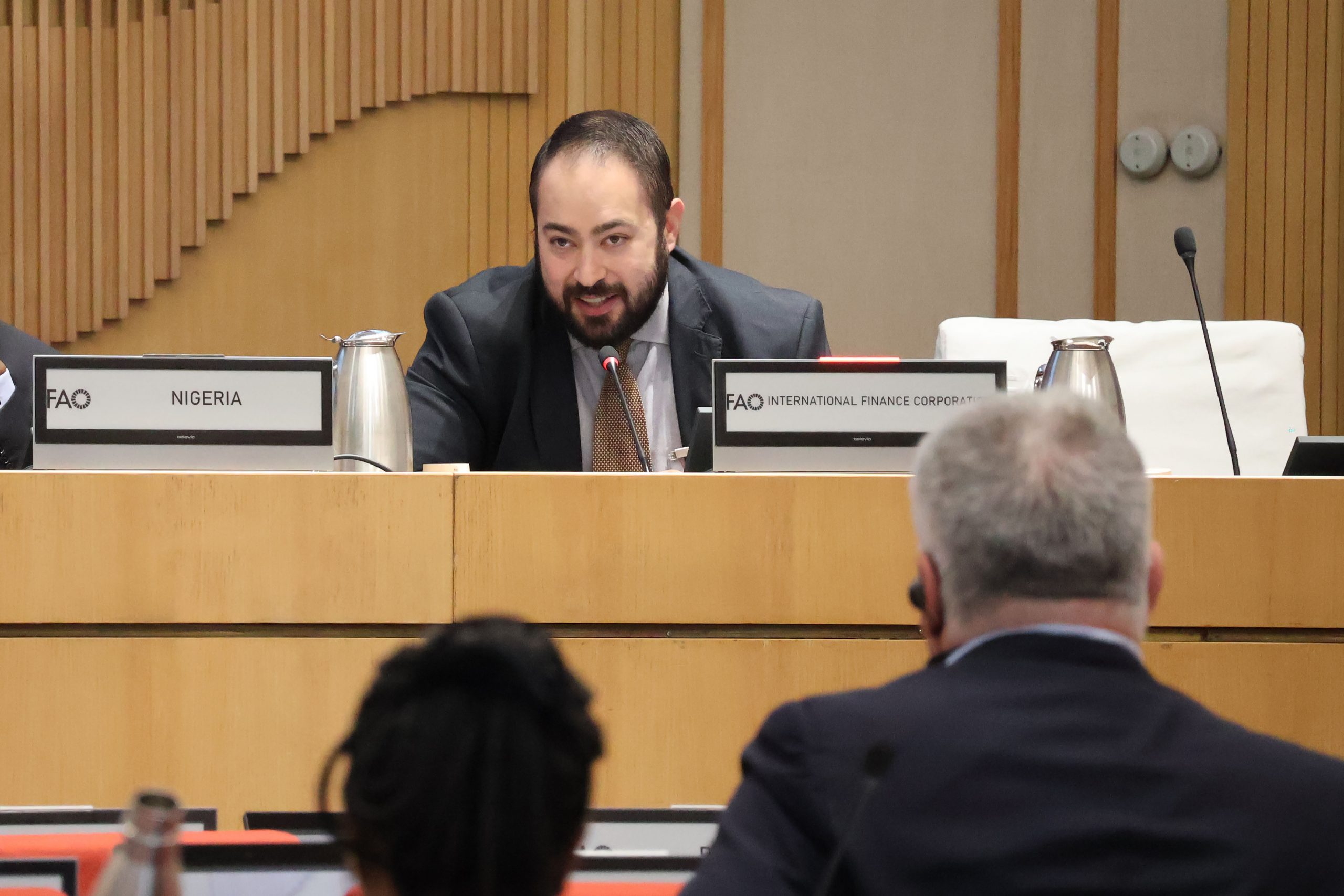 Perez emphasized that dairy is an attractive sector for investment development because of its clear positive impact on employment and income.
“Every dollar of investment in this sector, our data shows, has a multiplier effect that is significant compared to other sectors, in particular the cross comparison we do with other agri-food,” said Perez, who is Business Development Lead at the International Finance Corporation, which is a member of World Bank Group.
“The second point is that it’s an immediate gain as opposed to other sectors where there is more of a slope curve where the productivity gains take a while to show. So in that sense and to align to our strategy focusing on more jobs and quality jobs, the dairy sector is one of the primary focuses for us in the next few years.”
Speakers emphasized that the greatest opportunities for employment generation often occur beyond primary production, in areas such as milk collection systems, cold chain infrastructure, transportation, processing facilities, quality assurance, packaging, distribution, and supporting services.
The panel also noted that dairy transformation can create meaningful opportunities for women and young people, particularly through entrepreneurship, cooperative leadership, extension services, processing operations, and distribution networks:
- Elmi, Director of Livestock Production at Kenya’s Ministry of Agriculture and Livestock Development, shared Kenya’s experience in building one of Africa’s most developed dairy sectors.He highlighted the role of farmer-owned cooperatives in connecting smallholder farmers to formal markets, improving milk quality, reducing losses, and increasing farmer incomes.”Ownership, not just access, transforms linkages,” Elmi said, pointing to successful cooperative-led models that allow farmers to participate in value creation throughout the supply chain.Kenya’s dairy sector currently contributes approximately 4% of the country’s GDP and continues to expand through investments in cooling infrastructure, feed production, digital systems, and farmer services. The country is investing in genetic improvement of livestock with the goal of dramatically increasing milk production.
- Olaniran, Permanent Representative of Nigeria to FAO, outlined Nigeria’s efforts to strengthen domestic dairy production.He acknowledged challenges related to infrastructure, milk collection, processing capacity, and fragmented production systems, while emphasizing growing government support for dairy sector development.”The government has now put policies in place that are helping the private sector become more enthusiastic, both indigenous and foreign,” Dr. Olaniran said.He identified improved collection systems, processing infrastructure, and local value chain development as critical priorities for future growth.
- Mortensen, International Head of Sustainability at Arla Foods, highlighted the company’s work supporting dairy sector development across Africa and Asia.Mortensen emphasized the importance of partnerships, training, market access, and infrastructure development, particularly for women participating in dairy value chains.“Women are at the heart of our inclusive business model,” she said. “Women are pivotal in dairy farming in Bangladesh, in Nigeria, Indonesia, Pakistan, Ethiopia,” where the company is targeting training, market access, managerial jobs, finance training and entrepreneurship opportunity. “And we are very proud to see more women entering the formal dairy economy as a result.”For example, in Bangladesh, “more than 80% of the farmers enrolled in the program are women, and it has changed their role in families and communities,” Mortensen said.
Conclusion
As global demand for dairy products continues to rise, the opportunity for sustainable dairy transformation has never been greater. Investment can strengthen entire value chains, creating decent jobs, expanding market access, supporting women and youth, building resilient rural economies, and developing food systems capable of meeting future demand.
For policymakers, investors, and development leaders searching for practical solutions to some of today’s most pressing economic challenges, dairy may represent one of the most overlooked areas for investment.
The future of dairy is not simply about producing more milk. It is about creating more opportunities.