The opportunity of livestock investment is underappreciated and untapped, but wi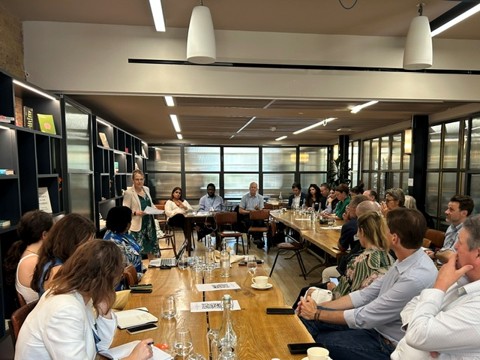 th more awareness and collaboration, livestock can become an even more successful solution to a growing – and hungry – world population, especially in low to middle-income countries.
That was the central focus of a London Climate Action Week side event, “Building Resilience Through Sustainable Livestock Systems in Emerging Economies,” organized by Global Dairy Platform (GDP) and the International Livestock Research Institute (ILRI). The event, which took place 23 June at Regen House, highlighted growing evidence that well-designed investments in livestock can deliver environmental, economic and social benefits simultaneously.
Livestock is a development opportunity
Moderator Shirley Tirwali, an internationally recognized agricultural scientist and senior research leader, opened with a few stage-setting statistics:
- Of the world’s 8 billion people, almost 80% live in Africa and Asia
- About 88% of the total rural population is in these regions
- In Africa, almost 50% of the workforce is employed in agriculture, much of it involving livestock
She introduced opening speaker ILRI Director General Appolinaire Djikeng, who challenged participants to rethink how livestock is viewed in climate discussions.
While livestock is often defined primarily by its environmental footprint, Djikeng emphasized that for the 1.3 billion people who depend on livestock for food, income and resilience, it is also a critical development asset. With demand for meat and dairy expected to double across low- and middle-income countries by 2050, investing in sustainable production systems is becoming increasingly urgent.
He highlighted five trends reshaping the sector:
- Formalization of informal markets
- Productivity gains instead of herd expansion
- Greater climate accountability
- Digital and financial innovation
- The growing leadership of women and youth across livestock value chains
Closing the climate finance gap
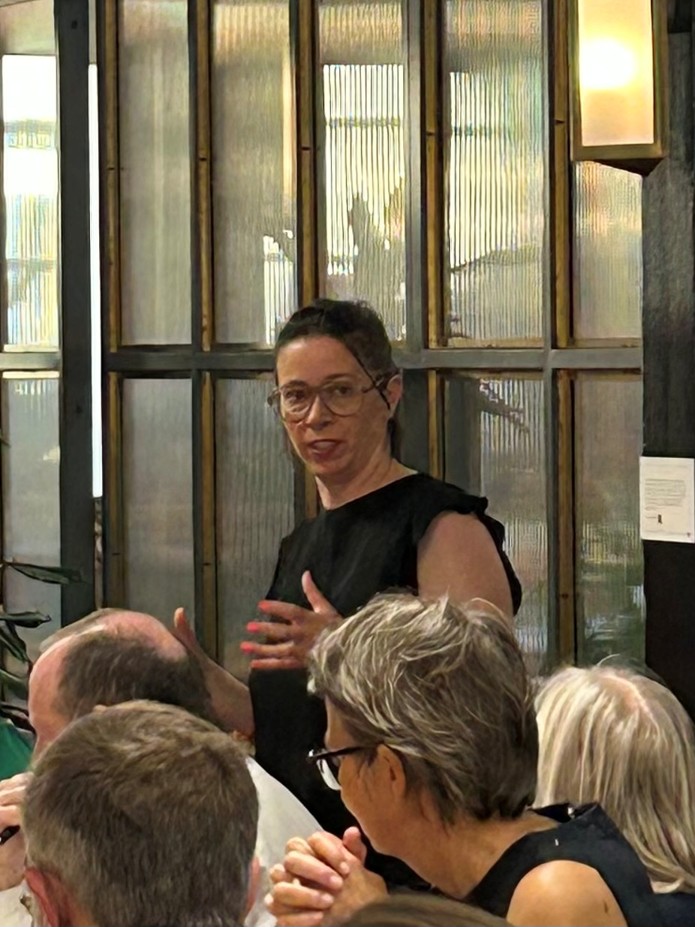
Despite livestock accounting for an estimated 12% to 14% of global greenhouse gas emissions, international advisor Purvi Mehta noted that the sector receives less than 1% of global climate finance.
Private climate investment continues to grow rapidly, but most capital flows toward energy and transportation, leaving agriculture significantly underfunded despite its potential to generate measurable climate, nutrition and economic benefits.
But she positioned this gap as a huge opportunity – both in mitigation and also adaptation. Livestock is one of the highest-leverage climate investments available, she explained, because it simultaneously delivers climate mitigation, adaptation, food security and income growth.
This sort of return on investment can be attractive to the public sector, private investors and philanthropies. She said livestock is not a climate finance problem to be managed – it is a climate investment opportunity waiting to be seized.
 Proven solutions are ready to scale
Multiple speakers showcased examples demonstrating that climate-smart livestock investments are already delivering results:
- ILRI Programme Director Anthony Whitbread shared research from Tanzania showing that integrated approaches — including improved forages, better animal health and mechanization — can reduce emissions by 30% to 40% while increasing productivity and farm incomes. He also highlighted major initiatives, including the Climate Smart Dairy Transformation project and Dairy Interventions for Mitigation and Adaptation, both designed to strengthen climate resilience while improving livelihoods across East Africa.
- Mireille Einwachter, Chief Sustainability Officer at Royal FrieslandCampina, described how the Value4Dairy Consortium in Nigeria is building resilient local dairy supply chains through long-term partnerships among private companies, farmer cooperatives and technical experts. The initiative combines reliable market access, genetics, forage development and farmer training to create systems designed to remain sustainable long after project funding ends.
- Also, during comments, Stephanie Speck of the Alliance of Bioversity International and CIAT discussed how scientific evidence can unlock investment. A decade of research on low-methane forage systems in Colombia helped secure $7.5 million in concessional funding while attracting an additional $20 million in private investment.
Collaboration is the investment model
Rod Bassett, CEO of UK-based Agrium Capital, said private investor interest in livestock is growing, citing the firm’s long-term work developing Ethiopia’s dairy sector through blended finance and strategic partnerships as an example.
His company also recently signed a Memorandum of Understanding with the Nigeria Sovereign Investment Authority (NSIA) to advance the development of a large-scale integrated dairy livestock production and processing platform set to transform Nigeria’s dairy industry and strengthen national food security.
Bassett’s message was clear: scaling sustainable livestock systems requires collaboration among investors, governments, researchers, businesses and farming communities.
Connecting the pieces
As a wrap-up for the event’s speakers, Donald Moore, GDP Executive Director, emphasized that the individual components needed for transformation already exist.
“We have the evidence. We have the innovation. We have successful models. We have growing investor interest. We have governments seeking solutions and farmers ready to participate in change,” he said.
The remaining challenge is connecting those pieces into coordinated, scalable systems.
GDP has seen this approach succeed through initiatives such as the Dairy Nourishes Africa program, where partnerships among local institutions, producers and industry organizations helped build more resilient dairy value chains.
Tirwali noted in closing that GDP and ILRI will continue this collaborative conversation at upcoming events including the African Food Systems Forum, Climate Week NYC and the World Food Prize Borlaug Dialogue, connecting the investments, partnerships and knowledge needed to build resilient livestock systems at scale.