


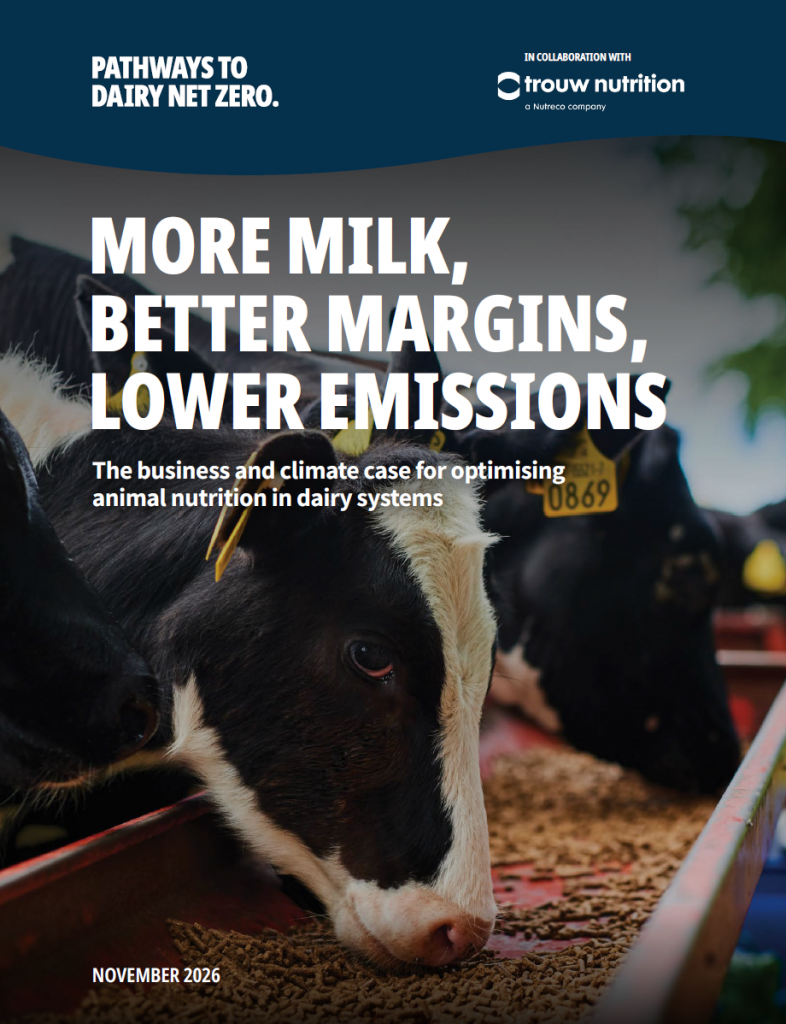
A new paper on how better animal nutrition can lift dairy productivity, strengthen farm economics and reduce greenhouse gas emissions is available from Pathways to Dairy Net Zero (P2DNZ), in collaboration with Trouw Nutrition.
The paper, “More Milk, Better Margins, Lower Emissions: The business and climate case for optimising animal nutrition in dairy systems”, shows that optimizing nutrition, from the calf through every stage of a cow’s productive life, is one of the clearest opportunities to improve productivity, profitability and emission intensity at the same time, in every dairy system worldwide.
Feed is the largest variable cost on many dairy farms, accounting for around 70% of variable costs in advanced systems, according to industry estimates. That makes nutrition one of the most powerful opportunities available to farmers, feed companies, processors and policymakers working to make dairy more productive and sustainable.
The paper reviews the global evidence and sets out five practical levers to optimize nutrition: improved feeding practices, forage and pasture management, livestock management, lower-emissions feed, and methane-suppressing feed supplements. It also models the potential impact of feed-based interventions in two contrasting dairy sectors, India and the United Kingdom, through 2050.
Key paper findings include:
- A 10% improvement in feed efficiency can increase gross margins by more than 7% in British dairy systems
- In Tanzania, modeling indicates better feeding could increase milk yields by up to 60% and reduce emission intensity by up to 52% on traditional dairy farms
- Emission intensity falls sharply as milk yields rise, so even small productivity gains in lower-yielding systems can deliver substantial reductions in emissions per unit of milk
- Sequencing matters: farms should secure sufficient feed and water and improve efficiency before investing in precision tools and advanced technologies
- In India, yield gains combined with three targeted feed measures could cut projected 2050 emissions by about 40% compared to a constant-yield scenario, though emissions would still rise above current levels as the sector grows
- In the UK, where emission intensity is already low, the same approach could reduce emissions by roughly 15% compared to a constant-yield scenario
- Nutrition delivers the greatest impact when integrated with animal health, welfare, breeding and herd management
The paper also outlines actions for the wider value chain, including strengthening advisory and extension services, accelerating access to precision feeding, and streamlining approval of safe, effective feed additives.
